
Understanding TB 500 and how it has made quite a splash in discussions about recovery and tissue repair among both researchers and those in performance-focused circles. I’ve noticed it popping up in forums, science chats, and any place where people kick around new ideas for recovery methods. If you’re only just hearing about TB-500 now or you’re curious why it draws so much attention, I’m breaking down what it is, how it’s studied, and why it’s raising eyebrows in the research world.
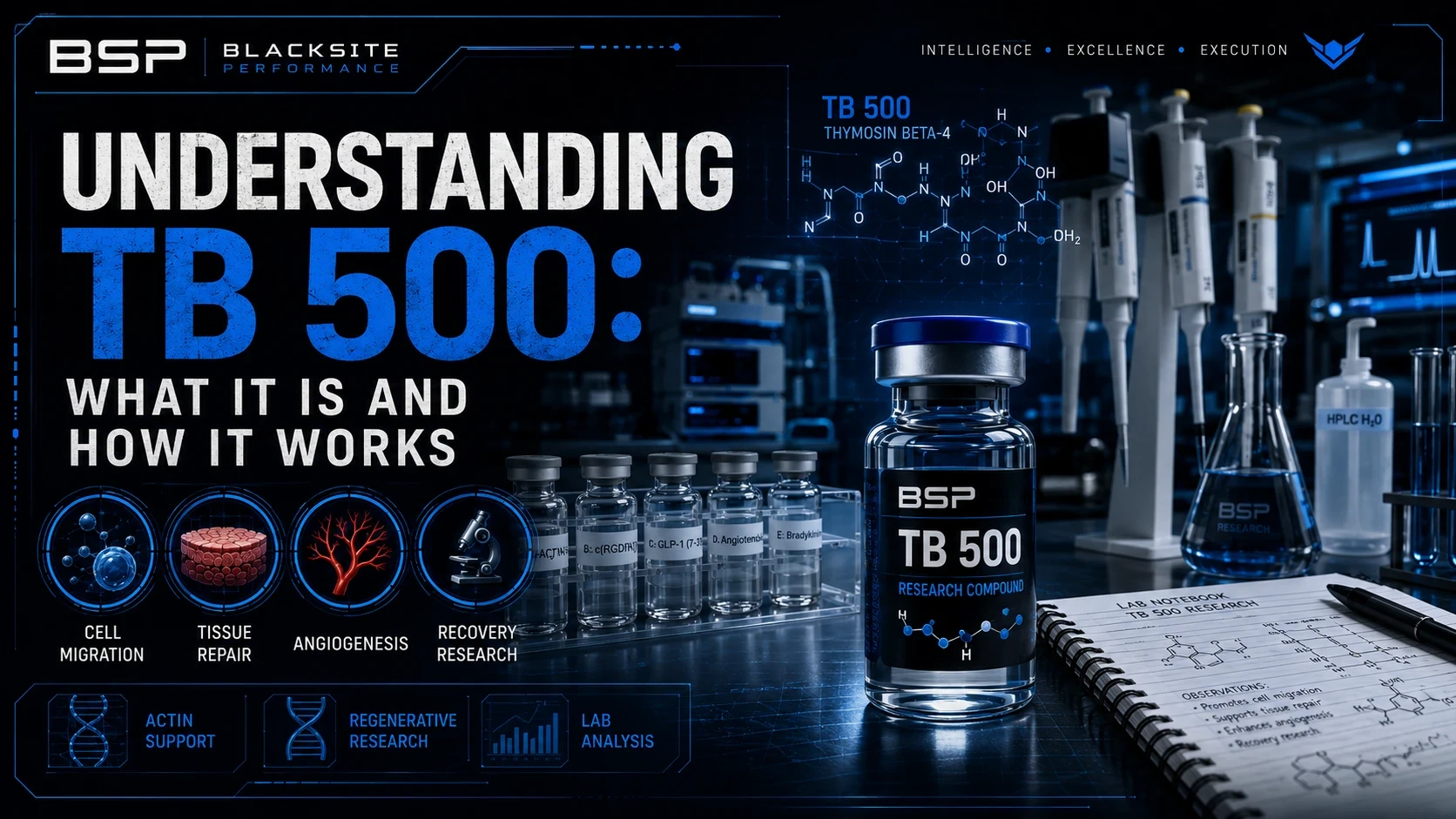
Table of Contents
Understanding TB 500
What TB-500 Is
TB-500 is a synthetic peptide frequently mentioned in connection with tissue repair and recovery studies. Its official name is Thymosin Beta-4 Fragment. Essentially, TB-500 is a lab-made version derived from a specific chain of amino acids in the much larger natural protein known as Thymosin Beta-4. Researchers chose TB-500 because it’s far more practical and economical for large-scale research than the full protein, which can be tough and expensive to work with.
This peptide first drew significant attention because of promising animal research. Over time, it became a hot topic for those looking into soft tissue, muscle, ligament, and tendon recovery. Spend any amount of time in sports or performance communities that love their science, and you’ll find people referencing TB-500 as a fascinating tool for potentially giving recovery a boost.
Connection to Thymosin Beta-4
TB-500 often gets mentioned alongside Thymosin Beta-4. The main thing to know is TB-500 isn’t identical to naturally occurring Thymosin Beta-4; it’s a well-known fragment of the bigger protein. Thymosin Beta-4 exists in almost all tissues and does a range of jobs in the body, especially when it comes to repair and helping cells move. TB-500 was made to target some of the most active regions of Thymosin Beta-4, with the goal of replicating or even stepping up those repair functions.
However, the science about TB-500 doesn’t always line up exactly with research on the full Thymosin Beta-4 protein. There can be differences in dosing, how the body takes it in, and how it works. That’s why scientists try to be clear when comparing the two. Still, most conversations about TB-500 trace back to what we know from Thymosin Beta-4 studies.
How TB-500 Works In Research Models
Most of what has been learned about TB-500 comes from studies in animals and research with cells. Scientists are mainly interested in its impact on actin, a crucial protein that helps cells move and organize themselves. When tissues are hurt, quick cell movement and organization are key to getting things back to normal; that’s exactly where actin is a player.
In research, TB-500 has been checked out for its role in actin binding, encouraging cell migration, and guiding tissue remodeling. In some experiments, TB-500 appears to signal cells to head to injured spots and jumpstart repairs through complex chemical messages. This is why many studies zoom in on muscles, tendons, or ligaments, since improved cell movement here could mean faster, more effective healing.
Why It Is Discussed For Recovery
The excitement over TB-500 and recovery springs from early findings that suggest it could help speed up or support injury repair in animals. I see athletes, trainers, and pet owners (especially folks with performance horses or dogs) bringing up TB-500 in relation to:
- Muscle and tendon restoration post-injury
- Helping heal soft tissue like ligaments, fascia, or connective tissue
- Reducing downtime from injury back to functional movement
The reason this gets so much traction is that tendon and ligament injuries are notoriously slow healers. These tissues lag behind muscle when it comes to recovery, so anything that could give a boost in cell migration and tissue formation creates a lot of buzz.
Inflammation And Healing Response
Inflammation happens naturally as part of the healing cycle, but too much of it can drag out the process or leave behind scar tissue. Studies on TB-500 have explored how it could affect inflammation, swelling, and the chemical signals involved in early stages of repair. Research models suggest that TB-500 might help keep inflammation under control, letting recovery cells get to work quicker without being bogged down by debris or excess scar tissue.
The big focus isn’t just calming swelling; it’s about shaping a recovery environment where swelling, new tissue growth, and the replacement of damaged cells all stay balanced.
Potential Benefits Being Studied
While much of the talk surrounding TB-500 still ties back to animal research, a few possible benefits capture the imagination:
- Quicker recovery time from muscle, tendon, or ligament injuries in animal trials
- Support for flexibility and returning full range of motion
- Improved wound healing for animals (from cuts or surgical wounds)
- General recovery boost, especially returning to training post-injury
Keep in mind, most current findings are from animal research or cell cultures; there aren’t large-scale clinical trials for humans yet. The hope is rooted in possibility, but more evidence is needed before these benefits can be taken as fact.
TB-500 vs. BPC-157
TB-500 and BPC-157 almost always get compared. I get questions about both often because their names tend to be mentioned together. Here’s how the comparison shapes up:
- TB-500: Usually highlighted for its broader repair signaling, helping cells move and support whole-body recovery in studies. Research often looks at muscles, tendons, and connective tissue, notably where big or several tissues could use a boost at once.
- BPC-157: More often mentioned with site-specific or local healing, such as repairing gut lining, tendons, and ligaments, especially at specific injury spots. Studies on BPC-157 frequently address recovery after local injuries or gut problems.
Some folks muse about combining both for all-in-one recovery, but each research model has its specific strengths (and drawbacks). Evidence for both is still in early stages, but it’s a cool comparison for anyone looking into peptide-based tissue repair.
What The Research Does Not Prove Yet
Studies on TB-500 remain very much in the experimental phase. There’s no solid proof it guarantees injury recovery, boosts performance above regular training, or can replace things like physical therapy, proper sleep, nutrition, or a solid rehab plan. Using TB-500 without expert guidance is not a shortcut to success; it’s merely a tool examined for supporting the body’s natural responses in research settings.
I find this crucial, particularly since hype can sometimes get ahead of solid science. Recovery’s bulk still comes down to the basics: smart training, enough rest, and consulting the right healthcare professionals.
Safety Considerations
Peptides like TB-500 always have me looking up safety details. Here’s what I gather from credible scientific sources:
- It’s not approved for human use outside of research studies
- No one knows the full long-term effects in people yet
- Risks exist for impurities, dosage errors, or contamination, especially with products lacking proper regulation
- Local side effects can include swelling or irritation where injected
- Potential for adverse or allergic reactions, particularly from low quality sources
Because of these risks, TB-500 is best left to closely supervised research. Anyone interested in it should always talk with a licensed medical provider in advance and steer clear of questionable, internet-sourced materials.
Why Product Quality And Testing Matter
Quality control in peptides is critical because impurities can easily slip into products. Here’s what I suggest checking for:
- Certificates of Analysis (COAs) showing what’s inside matches the label
- Third-party lab tests confirming purity and sterility
- Details on how the peptide is synthesized and checked for contaminants or mislabeling
- Suppliers that openly share all necessary documentation
Verified quality and independent lab checks separate safe research materials from risky ones. With online purchasing, where quality jumps around, this is even more important.
Research-Only Positioning
Everything here is meant for educational purposes only—TB-500 isn’t something I suggest for medical use, specific dosing, or including in a health regimen. Human research is still lacking, and self-use of research chemicals comes with serious risks. For anyone committed to recovery, stick to proven, supervised options and let peptide talk remain in the science-focused arena.
Final Takeaway
TB-500 gets spotlighted as a recovery and repair peptide, especially for its potential role in tissue signaling and accelerated healing in research models. Anyone pondering its use or learning about TB-500 should pay attention to what’s actually established, keep realistic expectations, and never cut corners with safety or product sources. The science on repair signaling is intriguing, but this is an area calling for care and further study—not shortcuts or hype.
Download the Blacksite Bloodwork Red Flag Checklist to help spot potential issues with new research compounds and supplements.
Disclaimer: This article is for educational purposes only. Not medical advice.
Please check out our blood checklist!
Or for New Parents follow along our partners for all things New-Parents related!
No responses yet