
AI is quickly becoming one of the most interesting tools in peptide research, understanding how AI is changing peptide research and making the process more innovative, quicker, and much less tedious than before is imperative. Peptide science, which once moved ahead by slow trial and error, now gets a powerful advantage from AI’s ability to sort through huge data sets and spot new research directions that would take humans much longer to find. Here’s a grounded look at where these changes are making real impact, and where caution is still really important.
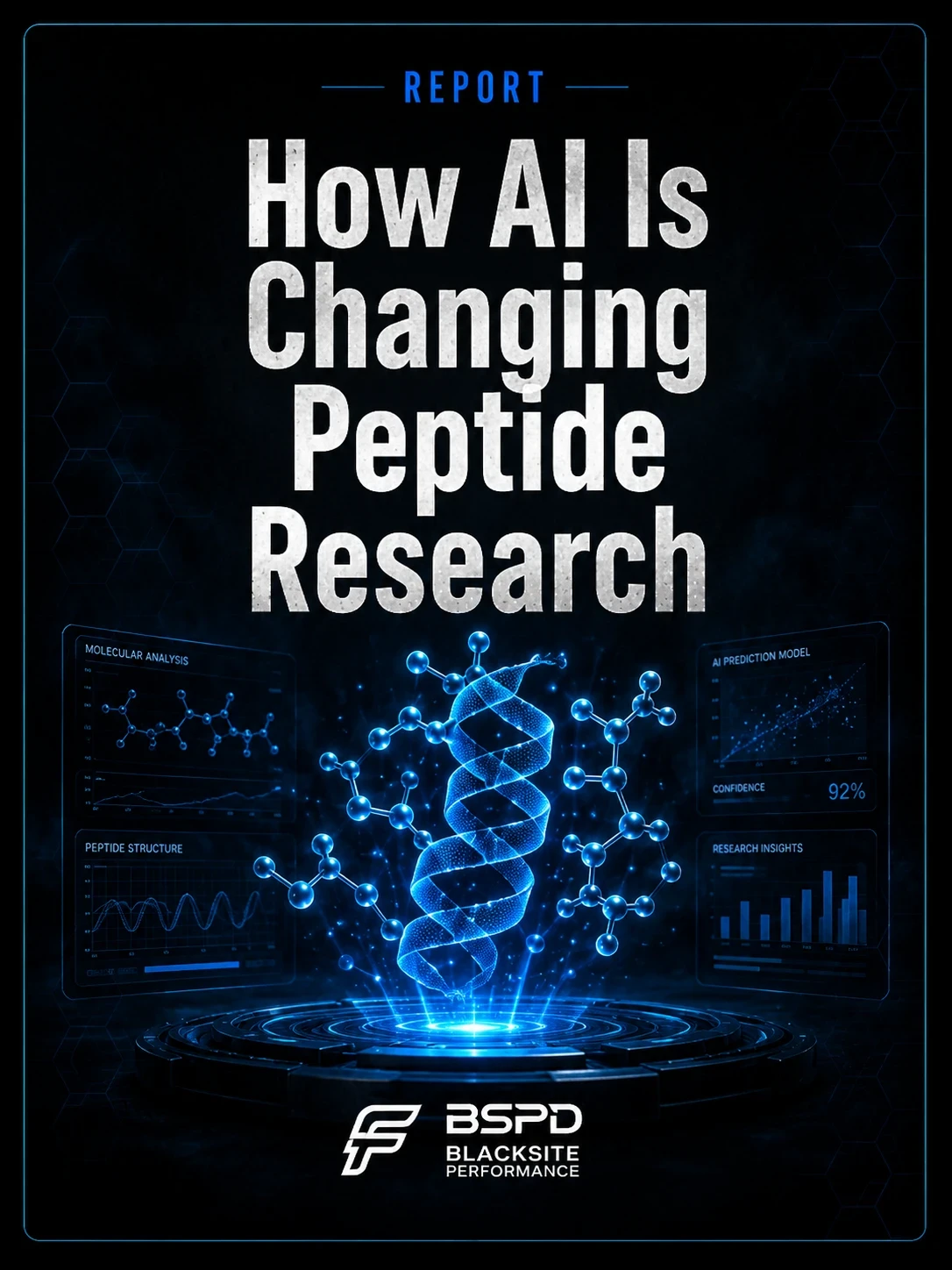
Table of Contents
How AI Is Changing Peptide Research
AI’s Growing Role in Modern Peptide Research
It wasn’t that long ago that peptide research meant hundreds (sometimes thousands) of manual experiments just to pin down a few possible candidates. Researchers would physically test lots of peptide sequences, hoping to find one that stands out for its biological activity or stability. The whole process was typically slow, expensive, and could still miss the best options hiding in plain sight.
Now that AI can comb through giant data sets and run complex calculations, things have gotten noticeably more efficient. Instead of testing every possible sequence in the lab, researchers can use AI models to predict which peptides are most likely to show interesting biological results. By narrowing down the field before physical testing even starts, scientists are saving a ton of effort and speeding up early stage research.
Beyond traditional experimentation, the use of AI has enabled researchers to manage the ever growing database of peptide sequences, functional groups, and structures. Older methods would require tedious comparison charts and hand sorting—AI, by contrast, can compare thousands of combinations in moments, offering advanced insights in pattern recognition that can shape future drug and therapeutic development. Labs now work more efficiently and focus their resources on what matters most: the compounds most likely to succeed.
What AI Actually Does (and Doesn’t Do)
AI is super handy when it comes to the early phases of discovery. Here’s what it helps with:
- Peptide Discovery: AI models look for possible peptide sequences that haven’t been tested yet, or spot new ways to arrange known building blocks.
- Target Prediction: By crunching huge volumes of data, AI can suggest which biological targets might interact with a given peptide.
- Stability Prediction: AI scans available research to estimate how stable a peptide might be in different environments, especially if you’re worried about things like solubility or breakdown.
- Molecular Modeling: Advanced models can simulate how a peptide folds, binds, and moves at the molecular level.
- Drug Delivery Predictions: Some systems try to predict if a peptide is a good candidate for different drug delivery methods—like oral, injectable, or topical.
What AI doesn’t do is guarantee anything works in humans. An AI prediction is not the same thing as clinical proof. These tools are really good at lining up smart guesses and making it easier to ask better questions. At the end of the day, though, real world testing is still super important. It’s the hands-on verification that determines actual safety and efficacy.
Key Areas Where AI Gives a Boost to Research
AI’s biggest benefits show up in places that used to be real headaches for researchers:
- Finding Useful Patterns: With so many peptide sequences and potential targets out there, humans can easily miss hidden relationships. AI can find patterns in research data, sometimes uncovering connections that would have taken years (or never) to spot otherwise.
- Reducing Wasted Time: Since AI can filter out weak candidates in the early screening stages, labs spend less time on compounds that won’t pan out anyway.
- Comparing Peptide Structures: When researchers need to match up new peptides with known structures, AI speeds things up by quickly highlighting similarities or differences that matter for stability or function.
- Predicting Problem Areas: AI can warn if a sequence might have issues, like rapid breakdown in the body, solubility problems, or risks of unwanted activity, which saves even more time and lab costs down the road.
Another area where AI comes into play is in optimizing formulations and delivery systems. For instance, predicting the interaction between peptides and different excipients or carrier molecules can be a painstaking process—AI can model these scenarios, allowing teams to focus on the most promising routes. This is especially valuable in fields like cancer therapy, where targeted delivery is essential and the window for success is narrow.
Real vs. Marketing-Driven AI Claims: Red Flags to Watch For
The rise of AI in research has brought a wave of buzzy marketing for all kinds of supplements and compounds. Not every “AI-powered” or “AIdesigned” peptide is backed by real science. Here are some quick red flags that I’ve noticed, and that anyone looking at the market should watch for:
- Overblown Claims: If a company says that their peptide is “AIoptimized” but doesn’t provide any specific research, methods, or data, that’s a warning sign.
- Skipping the Proof: AI predictions by themselves aren’t proof. Any wild claim about clinical performance should be backed up by real lab or human testing, ideally with clear Certificates of Analysis (COAs) and batch data.
- Absence of Explanation: If a brand can’t explain the process or show how AI factored into the research, there’s a good chance the claim is just for show.
- Implying Clinical Evidence: Using “AIpowered” language doesn’t make a peptide safe, pure, or effective for human use. Smart buyers look for clear testing data, not just a futuristic label.
It pays to be cautious in a landscape where trend chasing is common. If the company cannot back up its AI claims with traceable data or transparent details, skepticism is healthy. Real world impact comes from hard evidence, not catchy slogans.
Limits of AI: Where Traditional Chemistry Still Matters
Relying too much on AI can backfire, especially if the data going into the model isn’t great. Weak or biased data will give you weak or biased predictions. No matter how fancy the algorithm, garbage in means garbage out.
Final product safety and reliability still depend on good old chemistry and lab testing. Here’s what AI can’t replace:
- Identity Testing: Making sure what’s on the label is exactly what’s in the vial or capsule.
- Purity and Content Testing: Confirming there are no unwanted contaminants, and the actual dose matches what’s claimed.
- Stability and Degradation Checks: Real world testing to see how peptides hold up over time or when exposed to light, air, or different solutions.
- Safety and Toxicology: Only controlled studies can show the real safety profile of new peptides.
- Medical Review: For any peptide under serious consideration for use in humans, clinical oversight and well documented studies are absolutely needed. AI has no role here except to suggest where to look next.
AI is another tool in the research toolbox. It can help guide questions, pick the most interesting leads, and deal with complex data sets, but it doesn’t make a research compound safe for people. Nor does it ensure quality or replace regulatory processes.
How AI Supports Practical Progress
What does this actually look like if you’re in a research lab or working with a team exploring peptide candidates?
- AI models can suggest 100 promising sequences out of tens of thousands, so you might only physically synthesize the most likely winners. That means faster results, less wasted effort, and a higher probability of useful discoveries.
- Data crunching across thousands of studies can reveal patterns in what works and what doesn’t, highlighting structure-activity relationships or stability tricks you might never spot with the naked eye.
- Researchers can line up multiple features, like biological activity, solubility, and predicted half life, before moving to more expensive animal or cell testing. This supports smarter planning and better resource use.
There’s also value in AI powered visualization. By graphing molecular interactions or folding patterns, researchers can make intuitive leaps that are tough to achieve from raw data alone. This visual insight means better communication within teams—and sometimes faster breakthroughs.
Common Questions About AI in Peptide Research
Question: Does “AIdesigned” guarantee a stronger or safer peptide?
Answer: Not at all. While AI can streamline the discovery phase, there’s no automatic guarantee that the end result is superior without solid, controlled testing.
Question: Are AI predictions reliable enough to skip other forms of testing?
Answer: AI predictions are only as good as the data you feed them. They can give you a head start, but hands-on verification, safety studies, and batch testing are still mandatory for anything moving toward real world use.
Question: What should buyers look for when evaluating “AIoptimized” peptide products?
Answer: Look for brands that share not just AI buzzwords, but also research data, clear COAs, transparent sourcing, and honest answers about safety, purity, and identity testing. If you can’t verify these details, it’s wise to be skeptical.
What’s Next for Peptide Research?
AI is going to keep transforming peptide science, mostly by helping researchers ask better questions and run smarter, quicker early stage studies. The best use cases focus on discovery, prioritization, and pattern recognition; these are functions where automation shines but clinical sense is still needed to interpret results.
The worst outcome is using AI claims just to make products look more advanced than they really are, without data or details. Peptide research still depends on verified identity, purity, and safety. Real progress is about connecting new predictions with proven results, not just chasing shiny tech trends.
Performance, whether in the lab or for consumers, always starts with better research and honest data. AI may change how we stumble upon and sort peptide candidates, but the foundation of good science stays the same: check the data, look for proof, and don’t confuse innovation with validation.
Download the Blacksite Bloodwork Red Flag Checklist to help spot potential issues with new research compounds and supplements.
Disclaimer: This article is for educational purposes only. Not medical advice.
Please check out our blood checklist!
Or for New Parents follow along our partners for all things New-Parents related!
No responses yet