
If you’re curious about what’s making waves in joint health and longevity circles, Cartalax is a name popping up more often. This little peptide isn’t nearly as well known as BPC-157 or TB-500, but it’s building a reputation as an interesting research molecule tied to cartilage, connective tissue, and the actual cells that maintain our joints. That’s pretty exciting for anyone dealing with aging joints or athletic wear and tear.
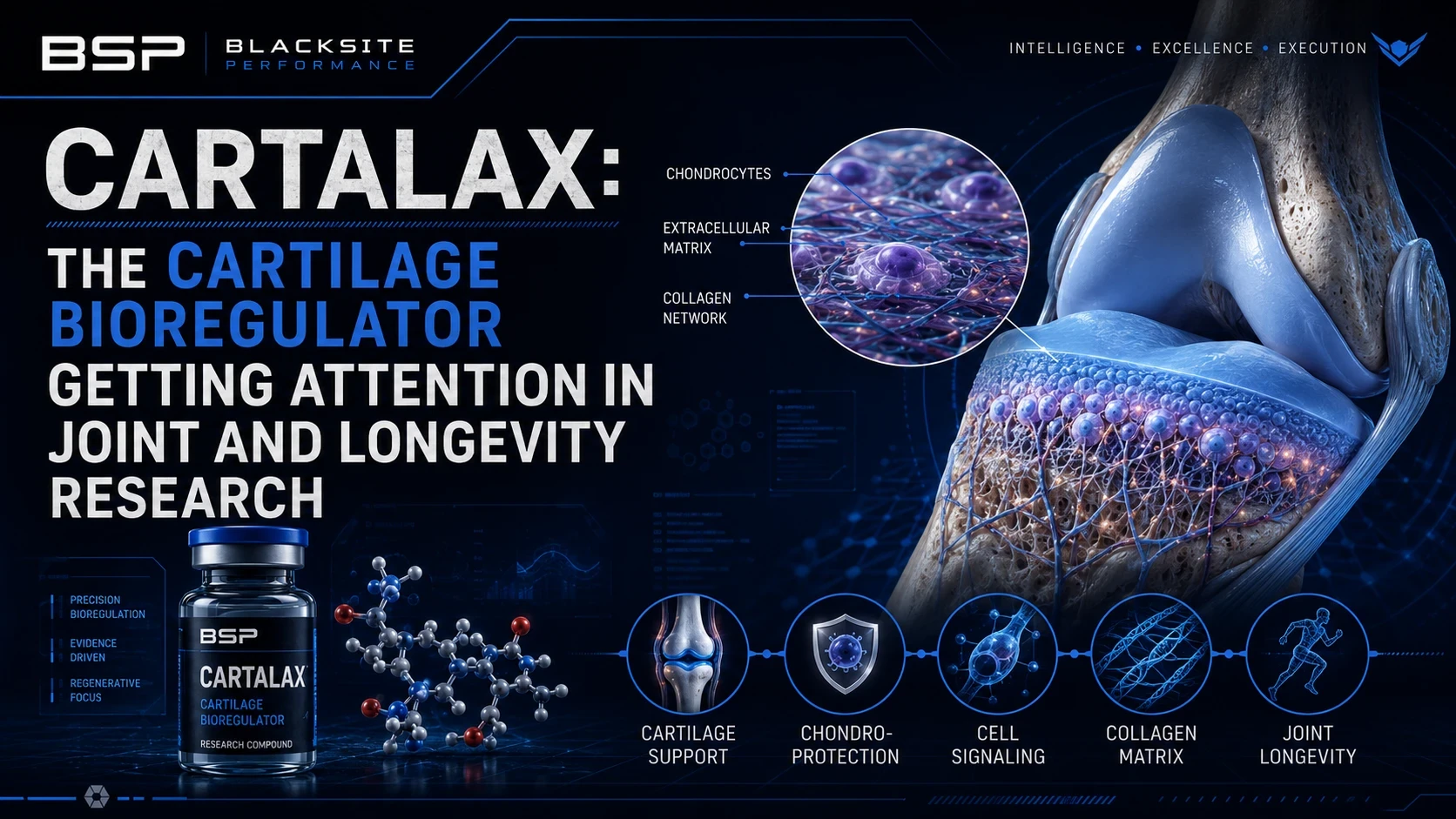
Table of Contents
What Is Cartalax? The Cartilage Bioregulator, Explained
I first stumbled onto Cartalax while researching how scientists approach cartilage aging and injury. Cartalax is an ultrashort peptide, which basically means it’s a tiny chain of amino acids, far smaller than most proteins you’ll hear about. In research labs, these are sometimes called bioregulators, because their role seems to be signaling to cells to help keep certain tissues working properly.
The cool thing about Cartalax is its focus. It’s talked about as a cartilage and connective tissue peptide, and research circles are looking at it for how it may support chondrocyte (cartilage cell) function, joint resilience, and tissue repair signals in aging or stressed joints. Some researchers suggest that bioregulator peptides like Cartalax could be game changers for areas traditional supplements can’t fully reach. Instead of just providing amino acids, it’s believed to encourage cells to do a more natural job of maintaining cartilage integrity. Scientists are still trying to get to the bottom of these mechanisms, but the early data hint that Cartalax might be particularly targeted and efficient for supporting cartilage longevity when compared to general protein-based therapies.
Other Names, Vendor Confusion, and Peptide Identity
Here’s one thing I noticed right away. Cartalax isn’t always called Cartalax. You’ll see different vendors or articles using names like “AED,” “AlaGluAsp,” or “T31.” Sometimes they mean the exact same peptide, and sometimes it’s pretty muddled. In most reputable references, Cartalax is described as an ultrashort tripeptide with the amino acid sequence alanine-glutamic acid-aspartic acid. If you’re searching for it or checking out studies, it helps to look for these alternate names and double-check the context, since some sources will mix them up.
The labeling confusion can make it tricky for people trying to track down scientific papers or order high-quality peptides for research. Checking that the supplier provides a clear peptide sequence, reliable paperwork, and solid third-party certification is a smart move for anyone looking beyond mainstream supplements.
Why Are People Excited About Cartalax?
What’s fueling the interest? Cartalax’s buzz comes from its potential to influence the building blocks and maintenance of cartilage, especially as joints age or get overworked. While a lot of buzzier peptides focus on things like muscle repair, gut lining, or wound healing, Cartalax is being discussed for an eye-catching goal: helping joints maintain their structure by targeting the actual cells and signals that keep cartilage healthy over time.
That makes it something people interested in healthy aging, athletic longevity, or intense recovery are curious about. I’ve seen it pop up in conversations about reducing joint stiffness, boosting recovery from long-term wear, and keeping old injuries from flaring up as mileage adds up. Its specific action on chondrocyte signaling, rather than just general tissue repair, gives it extra attention among those focused on long-term joint mobility rather than short-term fixes.
Cartilage, Chondrocytes, and Why They Matter
Cartilage is the tough yet springy stuff cushioning our joints, letting bones glide smoothly while absorbing shocks and protecting against everyday wear. The star cell here is the chondrocyte, which is basically the manager of the cartilage matrix. Chondrocytes keep cartilage proteins like collagen and proteoglycans balanced, allowing healthy water content and resilience.
Cartalax is getting attention because some researchers think it may signal chondrocytes or influence the cellular environment around them. In theory, that could help support stronger, more resilient cartilage, something that’s super important as we age or after years of athletic activity. Healthy chondrocyte activity isn’t just about repair. It’s central to preventing the slow decline of joint function, helping ensure daily movements remain comfortable and injury risk is minimized as time goes on.
What Makes Cartilage Strong? The Cartilage Matrix
When you look into joint health, you see the same few ingredients pop up again and again: collagen, proteoglycans, and water. Collagen is the structural backbone, while proteoglycans are big spongy molecules that attract water and give cartilage its cushion. When chondrocytes can’t do their job, or when the matrix breaks down, cartilage becomes dry, stiff, and cracked, leading to discomfort or osteoarthritis down the line.
Research on Cartalax points out its potential role in supporting this matrix. Rather than just adding raw materials, like you see with some supplements, these short peptides like Cartalax could help maintain the right signals for healthy cartilage turnover and repair. This is a promising avenue, as it targets both the maintenance and natural rejuvenation processes rather than simply patching up existing wear.
Joint Health, Osteoarthritis, and Degenerative Cartilage Research
Osteoarthritis is probably the most common target of joint research these days; millions of people deal with it, and it’s all about worn-down cartilage and unhappy chondrocytes. While no peptide currently cures or directly treats arthritis, the focus on Cartalax is about supporting aging or stressed cartilage on a cellular level before serious degeneration takes hold. You’ll see it in research angles looking to slow down the breakdown or support tissue repair signals involved in joint aging.
I’ve noticed that a lot of people dealing with joint stiffness, lingering injuries, or reduced mobility are starting to dig into these new categories of peptides because standard support (like just using glucosamine or collagen) has limits if cartilage isn’t actually getting the right internal signals to regenerate. That’s why innovative peptides are a hot topic—especially among those frustrated with the slow progress of traditional supplement strategies.
How Do Bioregulator Peptides Work? The Research Angle
The idea behind bioregulator peptides is pretty new to most people. These are supershort strings of amino acids that seem to work not by supplying building blocks, but by acting as signals that nudge genes and cells to do their jobs better. The work of Professor Vladimir Khavinson and the St. Petersburg Institute often comes up here, especially for peptides like Cartalax and others that target specific tissues.
Instead of plugging gaps, bioregulators are thought to help restore normal cellular function, encouraging your body to maintain healthy tissue over time. Studies have shown these peptides influencing gene expression and protein production, though most of this data is early and focuses on animal or cell culture models, not large human trials. The pathway is still being mapped out, and there’s plenty of debate around how generalizable these signals are in real-world scenarios. Despite that, the field is sparking growing interest, especially among longevity scientists and biohackers, because it taps into the body’s natural repair loops.
Cartalax, BPC-157, and TB-500: High-Level Differences
If you’re already looking into peptides, you’ve probably run into BPC-157 and TB-500. The difference is mostly about where they seem to work best:
- BPC-157: Known more for gut and tendon support; people usually chase it for localized repair and digestive stuff.
- TB-500 (Thymosin Beta-4): Broader tissue remodeling and healing focus, often mentioned for muscle and general recovery.
- Cartalax: Leans into cartilage, chondrocyte performance, and the signaling involved in joint aging and repair.
So, Cartalax is a go-to topic among people serious about long-term mobility, especially where joint structure and cushioning matter most. For those dealing with cartilage-specific struggles (versus muscle or tendon), Cartalax has carved out a niche in online peptide circles and is likely to continue growing in relevance as more laboratory and clinical research comes out.
Why Aging Adults and Athletes Are Paying Attention
Anyone who’s clocked in years of sports or just regular life mileage knows that joint pains can sneak up, and old injuries have a way of resurfacing. Cartilage isn’t just a “shock absorber.” It’s the difference between moving freely and getting sidelined by aches, creaks, or stiffness that don’t bounce back. Aging adults know all about this cycle, and athletes, especially those with long training histories or impact sports backgrounds, are always hunting for ways to keep their joints happy for the long run.
Peptide research like Cartalax offers a different approach, focusing on the maintenance and signaling that keeps cartilage healthy rather than just dulling the pain or adding extra cushion. This angle is starting to get real attention in aging and recovery communities tired of quick fixes or “just live with it” attitudes. Many see it as one of the most promising advances in the science of movement and aging, especially as we learn more about how chronic joint issues can limit activity and overall well-being long before people expect.
What the Evidence Shows (And What It Doesn’t)
The science around Cartalax is promising, but it’s early days. Most of the published work comes from in-vitro studies (done in cell cultures) or animal models, often focusing on signals tied to antiaging and cartilage tissue support. There’s a pretty noticeable gap when it comes to large, well-controlled human studies. Anecdotes and early preclinical findings are interesting, but it’s super important not to overstate what’s proven. As of now, Cartalax is considered a research peptide, not a clinical treatment for any disease or pathology.
If you’re considering any peptide for self-experimentation, keep in mind that credible public data is limited, and claims floating around from vendors often outpace what’s confirmed in scientific literature. Looking at multiple sources and forming a cautious game plan helps balance hope with realism, especially given the supplement market’s mixed record for new compounds.
Safety, Purity, and Quality Concerns
Peptides like Cartalax need to be handled with care. Since they’re not regulated pharmaceuticals, the purity, sterility, and quality can vary a ton from vendor to vendor. I always recommend checking for independent third-party testing, certificates of analysis (COAs), and a vendor who takes transparency seriously. Missing or low-quality COAs are a red flag. Nobody wants to gamble on something going into their body without strict testing, especially when long-term effects aren’t fully mapped out.
The research peptide market is notorious for gray-area sourcing and inconsistent labeling, so careful research helps anyone considering experimentation make informed decisions. There’s also no long-term safety data available, so caution and professional medical advice should come first. If you’re unsure, check in with a healthcare provider to get another perspective on potential risks and benefits for your specific case, especially since lasting impacts are unknown at this stage.
Cartalax in Context: Final Takeaway for Joint and Longevity Fans
Cartalax offers a fresh conversation in the world of peptides and joint biology. It’s not just another recovery shortcut; it’s about digging into how cartilage works, what keeps it healthy, and how joint aging might be slowed down on a cellular level. That’s pretty interesting for both aging adults and athletes looking for longevity, mobility, and the science of moving well into later decades.
The upside: Interesting research and a promising new direction for joint health. The caution: There’s a gap between early research and real-world proof, so treat claims with a healthy dose of skepticism and jump into the science before making decisions. Whether you’re tracking your own recovery or just exploring cutting-edge longevity tools, Cartalax is worth keeping on your radar for the next few years. Staying sharp as new data emerges makes you more prepared to pick up on what might become the next big thing in joint support.
Frequently Asked Questions
Question: Is Cartalax approved by the FDA?
Answer: No, Cartalax is not FDA-approved or cleared for human use outside of research settings. Any use should be considered experimental, and it’s smart to consult a medical professional before considering self-experimentation.
Question: How is Cartalax usually supplied?
Answer: Cartalax is generally sold as a lyophilized (freeze-dried) powder that’s meant for reconstitution in research labs. The actual product label might say Cartalax, AED, AlaGluAsp, or T31. Always verify the source and certificate of analysis.
Question: Can Cartalax cure arthritis?
Answer: There’s no public evidence that Cartalax cures or treats arthritis. Most conversations focus on basic scientific research around supporting cartilage matrix signals or slowing degeneration, not on clinical treatments or cures.
Download the Blacksite Bloodwork Red Flag Checklist to help spot potential issues with new research compounds and supplements.
Disclaimer: This article is for educational purposes only. Not medical advice.
Please check out our blood checklist!
Or for New Parents follow along our partners for all things New-Parents related!

No responses yet