
If you’re on a weight loss journey, odds are you’ve heard someone mention L-Carnitine, but do you know how l-carnitine supports weight loss? Supplement companies paint it as a secret weapon for burning fat and revealing lean muscle. I’ve tried it myself and looked into the research, so I want to be straight with you: L-Carnitine isn’t a miracle fat burner. It’s more like a backup crew that keeps your fat-loss engine running smoothly, but you’ve still got to drive the car.
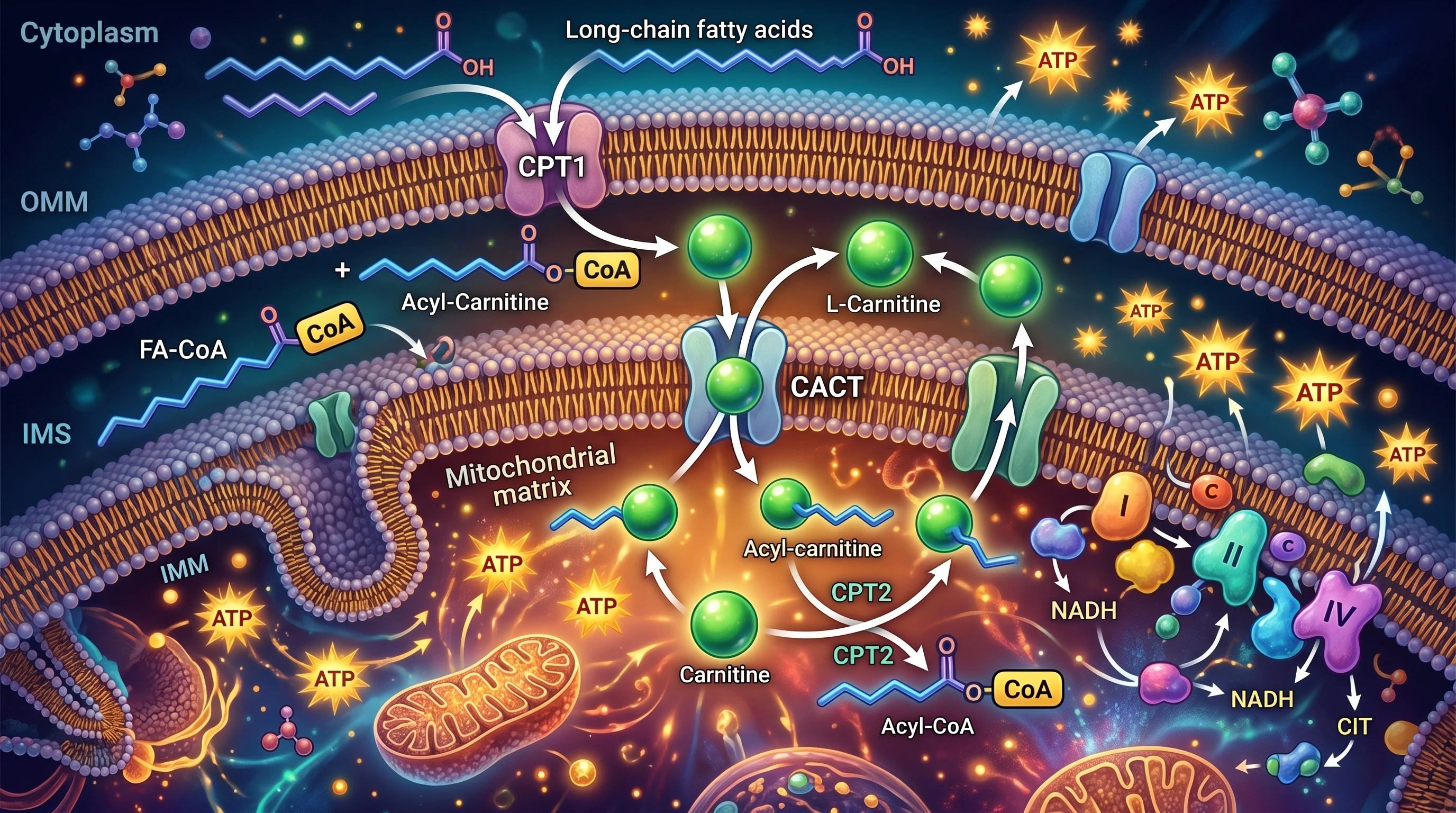
Table of Contents
How L-Carnitine Supports Weight Loss
What Is L-Carnitine, and What Does It Actually Do?
L-Carnitine is a compound your body makes from the amino acids lysine and methionine. It’s mainly found in red meat and dairy, but you make a good bit on your own unless you have a deficiency. The main job of L-Carnitine is shuttling fatty acids into your cells’ mitochondria. Think of mitochondria as little power plants where fat gets burned for energy. Without enough carnitine, this process gets sluggish. That’s why having enough L-Carnitine is essential for optimal fat burning whenever your body relies on fat as a fuel source.
For most healthy adults, L-Carnitine levels are usually fine, but some people, like vegetarians, older folks, or those with certain conditions, may run a little low. Because L-Carnitine is more abundant in animal products, if you follow a plantbased diet, you might have less natural carnitine circulating in your system.
How L-Carnitine Supports Fatty Acid Metabolism
Instead of burning fat directly, L-Carnitine helps get fatty acids where they need to go to be burned. Here’s the straightforward version:
- Carnitine acts as a “shuttle bus”: It grabs fat molecules in the bloodstream and drops them off inside the mitochondria of your cells.
- More efficient fat transport may help you use more fat for fuel, especially during exercise: This is great if you do a lot of cardio or endurance activities that rely on fatburning energy systems.
- Theoretically, supplementing could help “unstick” sluggish metabolism in some cases, but it won’t override a bad diet or super sedentary lifestyle.
If your goal is weight loss, the whole process of burning stored fat involves a lot more than just taking a supplement. This is just one small part of the bigger picture. L-Carnitine’s role comes into play when every other piece is dialed in—good nutrition, calorie control, and regular movement.
What the Research Says About L-Carnitine and Weight Loss
I looked over several studies and meta-analyses, and here’s the overall gist: L-Carnitine may help with fat loss, but any changes tend to be small to moderate. A review in Obesity Reviews (2016) found that people taking L-Carnitine lost a bit more weight than placebo groups, but not by much (it was usually less than 2 kg more over a few months).
The extra effect seems to be strongest for people who:
- Don’t eat a lot of red meat or dairy
- Are older or have medical conditions that cause low carnitine levels
- Do regular endurance training
For healthy, younger, meat-eating folks, the impact is decent but nothing to write home about. If you’re already dialed in with exercise and nutrition, L-Carnitine might give your efforts a slight edge, but it won’t transform your body alone. Also, research shows that the effect is more noticeable in those who have low baseline carnitine levels. So, if you eat a standard Western diet, the effect may be minimal unless you fit into a specific category.
There’s also research on recovery and endurance. Some studies suggest it could help reduce muscle soreness, boost recovery, or allow you to train harder for longer. Even so, the effects are relatively mild—L-Carnitine won’t let you skip steps or replace hard work.
Why Results Are Usually Modest (And When They Might Fall Flat)
This is super important: most weight loss from L-Carnitine is modest because fat loss depends on a calorie deficit, burning more than you eat. L-Carnitine can’t undo the effects of pizza binges or skipping workouts. Here’s why it sometimes disappoints:
- You already get enough through your diet
- You don’t have a deficiency or metabolic slowdown
- Your calorie intake is too high
- Your overall fatloss protocol (cardio, weights, sleep, protein) isn’t on point
I lost maybe 2 pounds more over several weeks while still focusing on staying active and keeping calories reasonable. But when my sleep tanked or my diet strayed, the L-Carnitine didn’t bail me out at all.
Another thing to keep in mind: genetics plays a big role in how someone responds to supplements like L-Carnitine. Some people may barely notice any effect, while others experience slight boosts in recovery or fat loss.
L-Carnitine Isn’t Magic: What It Doesn’t Do
L-Carnitine is not a “fat burner” in the way companies sometimes promise. Here’s what it doesn’t do:
- Doesn’t cause fat to “melt off” on its own
- Won’t get you shredded if your diet and movement aren’t on point
- Doesn’t cut cravings or increase calorie burn dramatically
L-Carnitine works in the background, so you don’t “feel” a kick or stim effect. Instead, it helps your system run better in situations where burning fat for energy needs a boost, like long cardio sessions, tough workouts, or times where your own levels are low. So when you’re following your routine and making progress, L-Carnitine can be a subtle supporter—just don’t expect dramatic changes overnight.
Can L-Carnitine Help With Belly Fat or Target Stubborn Fat?
I see a lot of marketing pushing L-Carnitine to “target belly fat” or “spot reduce” stubborn areas. There’s no real evidence it can target fat from specific spots. Fat loss happens pretty much everywhere the same way: total calorie deficit and time. Genetics usually call the shots on where you lose first and last.
You might notice a little difference over time, but it’s not because L-Carnitine is hunting belly fat. If you’re losing weight overall, your belly will shrink too. It just might be the last place you see progress since stubborn fat doesn’t go away quickly. Remember, supplements like L-Carnitine can’t change how or where you shed fat, but they can support your overall effort if other factors are in place.
Timing: Should You Take L-Carnitine Before Cardio?
A lot of gym folks swear by taking L-Carnitine before fasted cardio. There is a logic to it: when you run low on carbs, your body leans harder on fat for fuel. Carnitine could help your fattransport system operate at its best. Some people report feeling less wiped out during long workouts, but don’t expect a sudden burst of energy. For me, any difference I noticed was pretty subtle.
If you want to try it, most people take it 30 to 60 minutes before exercise. There’s no universal best time, so some folks just split their dose morning and night. Listen to your own body and see if it feels right for you. Consistency over time usually matters more than the exact timing—so make it a regular part of your routine if you’re going to give it a shot.
Oral vs. Injectable L-Carnitine: What’s the Difference?
This is popular to debate online, but I’ll keep it practical. Oral carnitine (liquid or capsules) is widely available and super easy to use, but not all of it gets absorbed. Sometimes, only about 10 to 20 percent makes it into your system. Injectable L-Carnitine, which is prescription only in many places, has higher bioavailability and is often used in clinical settings for medical reasons.
For most fitness folks and weight loss plans, oral L-Carnitine is way easier and doesn’t need needles or awkward prep. Back when I tried both, I didn’t notice a huge difference that justified any risks or hassle of injectable forms, so I always go with the easy route unless a doctor suggests otherwise. Oral versions are safe, effective enough, and don’t require medical supervision in most cases.
Safety, Side Effects, and Being Smart With Bloodwork
Most people tolerate L-Carnitine well. Sometimes, larger doses can cause stomach troubles (think nausea, cramps, or diarrhea) and, rarely, a “fishy” body odor. Doses around 1 to 2 grams per day are considered pretty safe for most healthy adults.
Certain people really should check with their doctor before supplementing, especially if you have kidney problems, are pregnant or breastfeeding, or are taking certain medications. Getting routine bloodwork helps catch anything unusual happening before there’s an issue. Blacksite Health has a helpful bloodwork checklist for folks using supplements as part of their stack.
Remember, healthy supplementation always includes keeping an eye out for potential side effects and tracking your results over time. If you’re unsure, check in with a professional who knows your medical history before making anything a regular habit.
Where L-Carnitine Fits in a Real Fat-Loss Plan
L-Carnitine is a support tool, not the mission itself. The real drivers of fat loss are consistency, nutrition, sleep, movement, and solid habits. L-Carnitine may help if:
- Your protein and calorie numbers are solid
- You’re moving regularly with cardio and lifting
- You want a slight metabolic edge, especially if your carnitine levels are lower
- You’re looking for something stimulantfree (no jitters)
It’s not wise to expect a supplement to do what only a full protocol can deliver. If your calories, protein, sleep, and exercise aren’t dialed in, L-Carnitine’s effects are going to be barely noticeable. But if everything else is in place, it can be a handy little bonus.
In my own program, I use L-Carnitine as a “nice to have”—never as a replacement for fundamentals like food quality, tracking calories, or training smart. Set your foundation first, then see if a supplement gives you that extra bit you’re looking for.
Practical Takeaways for Deciding if L-Carnitine Is Worth It
- Best for people already living the fitness lifestyle, eating well, and being consistent
- May give a mild energy or recovery boost, especially around workouts
- Won’t “burn” fat directly or save a bad protocol
- Great option if you want a stimulantfree support supplement
- Talk to your doctor, check bloodwork regularly if you use it longterm
If you want to take action, download Blacksite’s Bloodwork Red Flag Checklist to make sure nothing sneaks up on you and your health markers stay on point.
Frequently Asked Questions About L-Carnitine and Fat Loss
Question: Does L-Carnitine help with weight loss?
Answer: It can support fat loss by improving fat metabolism, but only makes a small difference when compared to a dialed-in diet and exercise.
Question: Does L-Carnitine burn belly fat?
Answer: No supplement can target belly fat only. Losing belly fat comes from total fat loss over time.
Question: Should I take L-Carnitine before cardio?
Answer: Some people like taking it before long cardio sessions. If you want to try it, take it about an hour before exercise and see how you feel.
Question: Is oral or injectable L-Carnitine better?
Answer: For almost everyone, oral L-Carnitine is practical and effective enough. Injectable forms are for medical reasons or serious athletes, usually under supervision.
Question: Why is L-Carnitine not working?
Answer: If your calories or movement aren’t right, or you already have enough, results may be hard to notice. Focus on the basics first before adding more supplements.
Question: Is L-Carnitine stimulant-free?
Answer: Yes, pure L-Carnitine does not contain any stimulants.
L-Carnitine works best as a background helper, not as the fix-it-all solution. Build your protocol first, then see if a little extra help from carnitine makes sense for your adventure.
Please check out our blood checklist!
Or for New Parents follow along our partners for all things New-Parents related!


No responses yet